The Gap Between Vision and Buildability
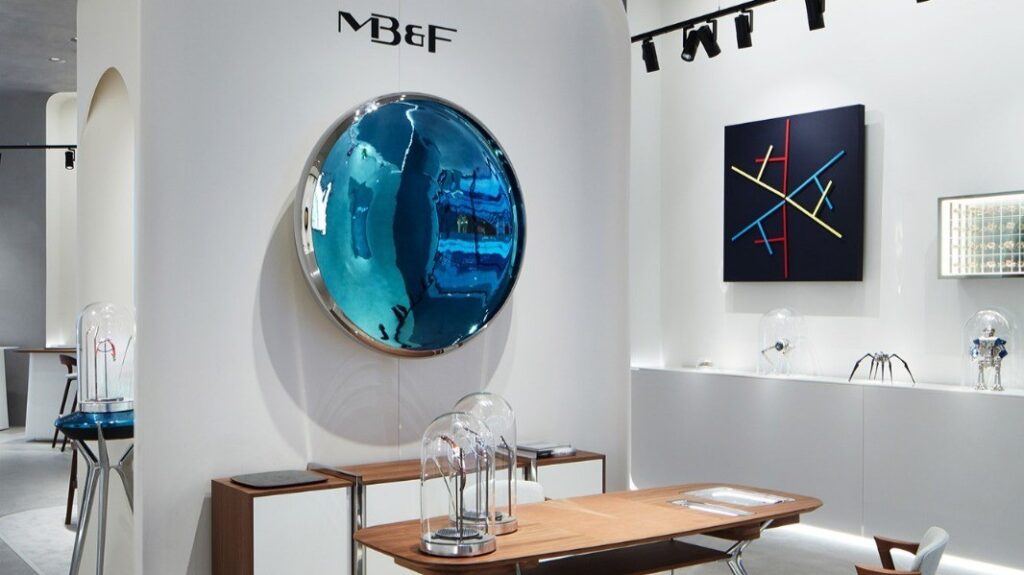
Recently, a Monaco-based architect sent us visualizations for a boutique project. Gorgeous renders. Precise dimensions showing a person standing in the space. Zero information about how to actually build it.
This is how most projects arrive.
The Gap Between Vision and Buildability
Architects and designers create extraordinary concepts. Our job is translating those concepts into objects that exist in three dimensions, survive long-distance logistics, and install in spaces that never match the floor plan.
The gap between these two realities – the designed and the buildable – reveals itself in predictable patterns. Not because designers lack skill, but because the constraints of manufacturing, transport, and installation operate in a different language than creative vision.

What Gets Lost in Translation
They don’t specify how that material responds to vibration during transport, or how thermal expansion affects tolerances when the piece moves from winter conditions to summer heat.
Joinery appears as lines on a drawing. The engineering that makes those joints survive repeated use, temperature fluctuation, and the reality that floors are never level – that’s the invisible layer. Designers sketch connections. Manufacturers engineer load paths, stress distribution, and failure modes.
Aesthetic specifications masquerade as technical ones. “Seamless finish” means different things to different manufacturers. Without a tolerance specification, you’re asking for an interpretation, not a standard. The range we’ve seen for “museum-quality” varies dramatically depending on who receives the brief.
Manufacturing technology is never documented. Designers create the vision.
Design documentation shows the finished state. It doesn't show the assembly sequence required to achieve it.
The Physical Constraints Nobody Draws
We recently engineered a floor-to-ceiling display system where the ceiling installation had to happen first due to structural requirements. The designer’s concept showed integrated floor anchoring – physically impossible once the ceiling assembly blocked access. The rendering was flawless. The construction sequence made it unbuildable as drawn.
This pattern repeats: ceiling-hung elements that prevent wall mounting, modular systems that require simultaneous installation from opposite directions, components that must be installed before the access point exists.
Installation choreography determines whether a concept becomes buildable reality or expensive architectural sculpture that never makes it past the loading dock.
When Site Reality Contradicts the Drawing
Architectural drawings show ideal conditions. Actual sites offer something else entirely.
We consistently encounter floors that aren’t level, walls that deviate from vertical, and ceiling heights that vary within a single room. Structural elements – pipes, conduits, existing fixtures – appear on site but are absent from the brief.
A recent project arrived with specifications assuming perfectly level floors and plumb walls. The elements we manufactured fit the drawing. The space we installed them in fit physics instead.
We adapted. But adaptation costs time, budget, and often requires on-site engineering that could have been avoided with a pre-installation survey.
The Custom Hardware Trap
Designers sketch custom mechanisms as minor details. A unique hinge. A proprietary mounting system. An innovative sliding mechanism.
These “details” represent engineering projects. The Swiss watchmaker brand display rotation system – initially sketched as “make it rotate smoothly and quietly” – required multiple motor assembly prototypes, structural load testing, and noise dampening engineering. What appeared as simple lines in the original concept became months of mechanical engineering work.
The Greubel Forsey display drawer system, developed in cooperation with Voltige Design & Architecture, presented similar challenges. Custom magnetic latching, structural stability, aesthetic integration – we worked with their team to engineer solutions that preserved the original design intent while meeting structural and functional requirements.
Custom hardware multiplies project risk. Each bespoke mechanism adds timeline and cost in ways invisible at the sketch stage.

The most effective design collaborations happen when architects engage manufacturers before finalizing specifications. Not after. Before.
The Drawer That Should Have Been a Door

Sometimes the clearest example of this gap appears in everyday decisions.
A designer specifies a drawer for a space barely larger than a mobile phone. A hinged door would be simpler, cheaper, and more reliable. But the designer wants a drawer.
Or the inverse: hinged doors with deep shelving mounted low to the ground. To access the back of that space, someone needs to get on their knees and reach deep into a cabinet. A drawer would bring that storage to the user. But the design shows doors.
Small changes at the design stage – a conversation about whether a drawer or door better serves the actual use – can mean significant cost savings and improved functionality. But that conversation rarely happens before specifications are finalized.
Where We Bridge the Gap
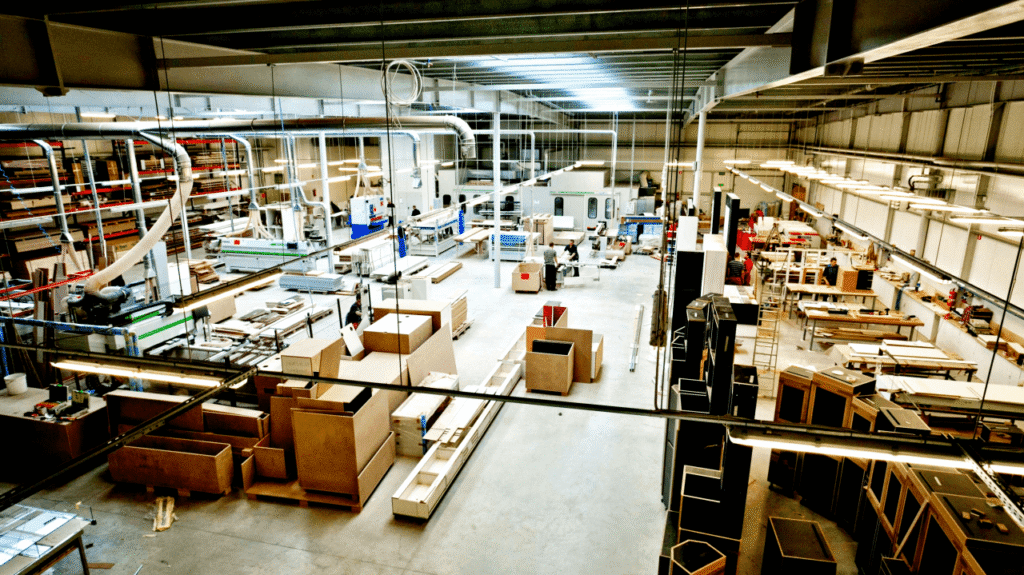
WRS operates between these worlds deliberately. When a global brand sends technical documentation refined across dozens of locations, we work within their system. When an architect sends concept renders and dimensional sketches, we engineer the entire technical translation: material selection, joinery methods, manufacturing processes, installation sequencing.
Both approaches reach the same destination. The route differs.
We’ve engineered projects where the design brief was five rectangles with “make this a display case” as the complete specification. We’ve executed others with comprehensive technical documentation. The common thread: understanding that the designer’s vision and the manufacturer’s constraints form two halves of the same deliverable.
We also coordinate with general contractors, providing them with technical drawings showing where outlets need placement, where conduits should run, how surfaces should be finished – ensuring our furniture integrates seamlessly with their work rather than fighting it.


The Invisible Engineering Layer
The reason “why your beautiful design became impossible to install”: the engineering layer between concept and reality remains invisible until it’s missing.
Load-bearing calculations don’t appear in mood boards. Thermal expansion coefficients don’t show up in material palettes. Installation sequencing doesn’t feature in renderings. Design and engineering are distinct competencies requiring different skill sets.
The projects that succeed – the ones where the installed piece matches the creative vision – happen when that invisible layer gets addressed early. When the manufacturer isn’t just executing drawings but translating vision into engineered reality.
What Designers Tell Us Afterward

The pattern we hear most often: “I wish I’d talked to you during the design phase, not after.”
Designers recognize in retrospect that small adjustments – a different material that behaves better during transport, a slightly modified connection detail that’s easier to manufacture, a drawer changed to hinged access – would have delivered a better result at lower cost with less construction drama.
But they didn’t know what they didn’t know. The manufacturing constraints, the installation realities, the material behaviors – these operate in a domain separate from creative vision.
The manufacturers who earn trust say “here’s what happens if we do it that way, and here’s an alternative that achieves your vision more reliably.”
FAQ – Design for Manufacturing (DFM) in Custom Furniture Projects
What is Design for Manufacturing (DFM)?
Design for Manufacturing (DFM) is the process of designing products with manufacturing, assembly, logistics, and installation requirements in mind from the very beginning. In custom furniture and commercial interiors, DFM helps bridge the gap between creative design concepts and practical execution.
Rather than focusing exclusively on aesthetics, Design for Manufacturing considers factors such as material behavior, structural integrity, production methods, transportation requirements, installation constraints, and long-term functionality.
The goal is simple: create furniture that not only looks exceptional in renderings but can also be manufactured efficiently, transported safely, installed successfully, and perform reliably for years.
Why do beautiful furniture designs sometimes become impossible to install?
Many furniture concepts are developed around visual appearance rather than installation realities. Architectural renderings often show the finished result without considering how components will be transported, assembled, lifted, anchored, or integrated on-site.
In practice, furniture installers must deal with:
- access restrictions,
- uneven floors,
- non-standard wall conditions,
- structural obstacles,
- installation sequencing,
- transportation limitations,
- safety requirements.
A design that appears perfect on paper may become extremely difficult or even impossible to install if these practical constraints are not considered during development. Successful furniture projects require both creative vision and technical engineering expertise.
What is the difference between furniture design and furniture engineering?
Furniture design focuses on appearance, functionality, user experience, and brand identity. Furniture engineering focuses on transforming those ideas into manufacturable and installable products.
Furniture engineering addresses:
- structural performance,
- connection methods,
- material specifications,
- load distribution,
- manufacturing feasibility,
- installation procedures,
- long-term durability.
While designers create the vision, engineers determine how that vision can become reality without compromising quality, functionality, or safety. The most successful projects integrate both disciplines from the earliest stages of development.
Why should manufacturers be involved during the design phase?
Many costly project issues originate from decisions made before manufacturing specialists are consulted.
When furniture manufacturers participate early in the design process, they can help identify:
- potential production challenges,
- material limitations,
- installation constraints,
- structural risks,
- budget implications,
- alternative construction methods.
Early collaboration often prevents expensive redesigns, manufacturing delays, and installation problems later in the project. Many architects and designers discover that small adjustments made during design can significantly improve project outcomes without affecting the original creative vision
What information is often missing from furniture design briefs?
Most design briefs contain aesthetic information such as dimensions, materials, finishes, and visual references. However, critical technical information is frequently absent.
Common omissions include:
- material performance requirements,
- manufacturing tolerances,
- structural specifications,
- assembly methods,
- installation sequencing,
- transportation considerations,
- maintenance requirements,
- environmental conditions.
These factors often determine whether a design can be manufactured efficiently and installed successfully in the intended location.