6 Unconventional Materials We Used for LVMH's Acqua di Parma Installation
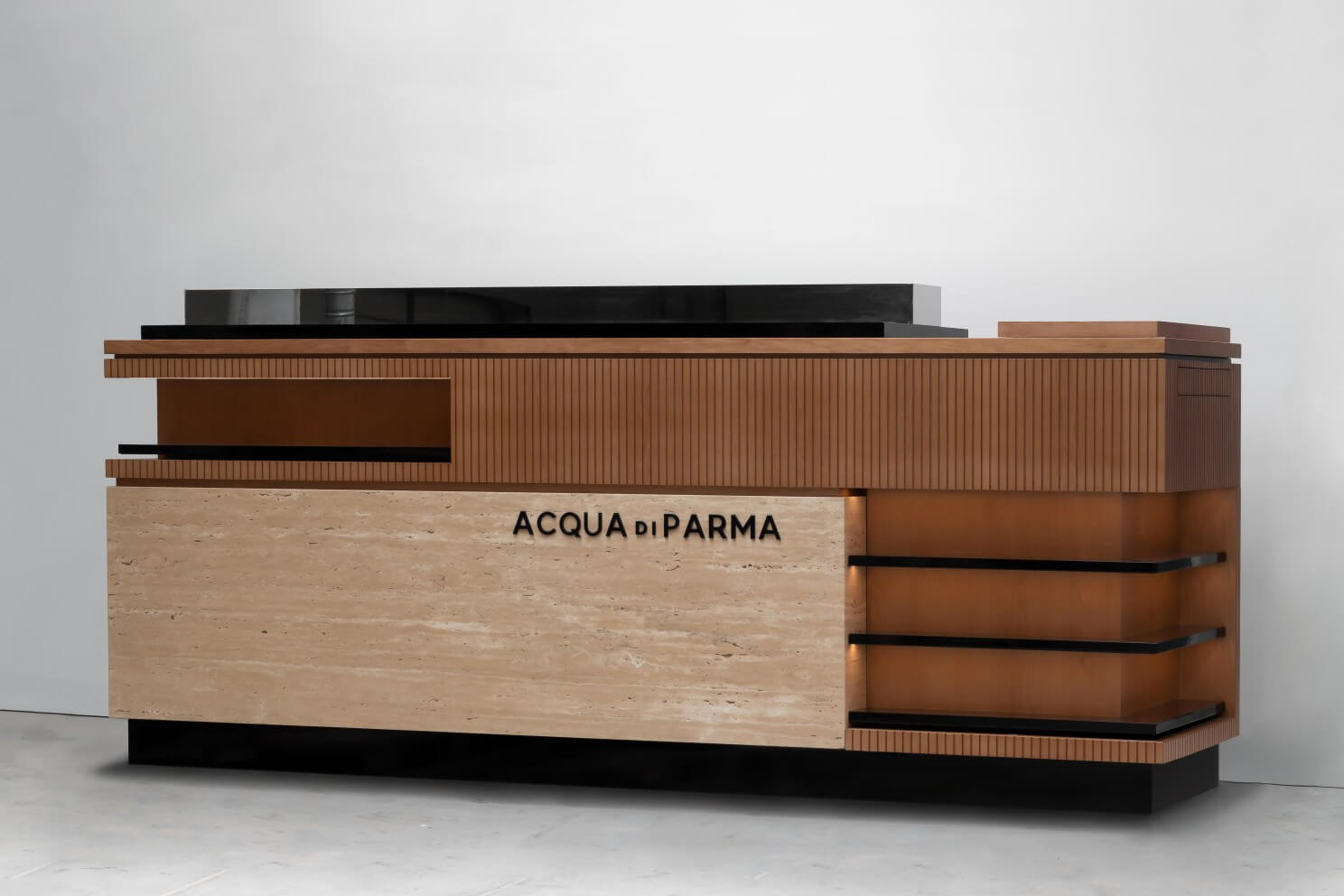
LVMH Perfumes & Cosmetics came to us with a challenge that most furniture manufacturers would politely decline. Their brief for Acqua di Parma Nuremberg location demanded Italian refinement combined with technical solutions that pushed our material science capabilities to their limits. And we loved it!
The question wasn't whether we could build display units. It was whether we could make each fragrance bottle look like a museum piece while maintaining the functionality of high-traffic retail.
Building What Doesn’t Exist Yet
Standard furniture manufacturing follows established processes: you select from available materials, apply known finishes, assemble according to proven methods… But this project? It required us to forget everything we knew before
Our Production Manager Wojciech puts it plainly:
“The client sent us just a colour sample and said ‘make this’. There was no off-the-shelf solution. We had to develop the entire finishing process from scratch.”
That’s where things got interesting.
Our Production Manager Wojciech puts it plainly:
“The client sent us just a colour sample and said ‘make this’. There was no off-the-shelf solution. We had to develop the entire finishing process from scratch.”
That’s where things got interesting.
The Unconventional Six
Here’s what we used:
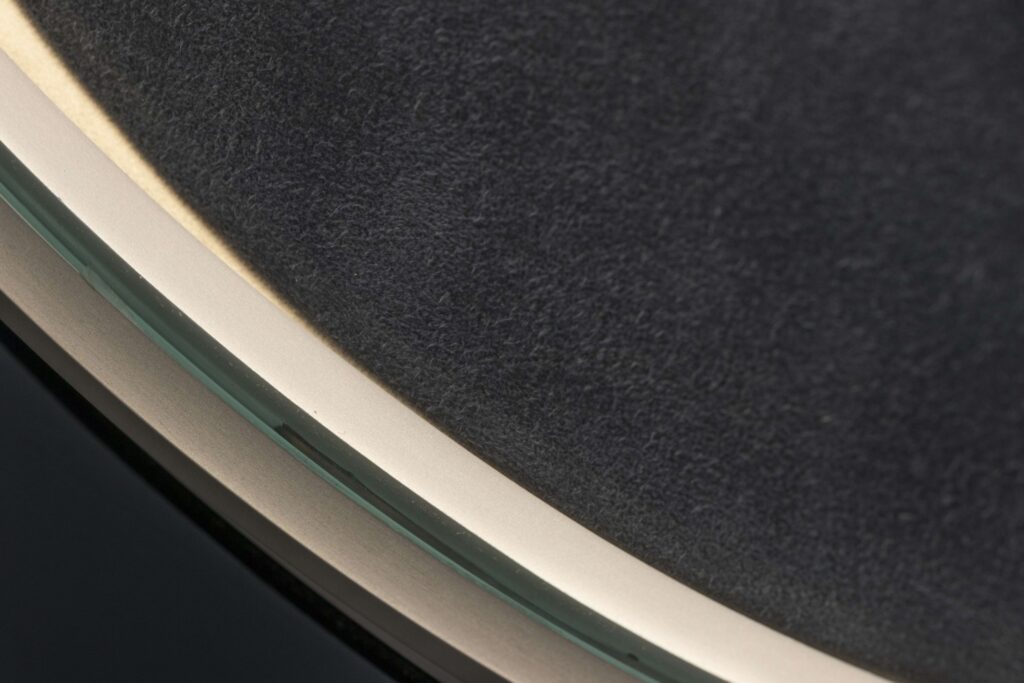
1. Architectural plaster on furniture panels We took building materials and applied them to MDF surfaces. Layer by layer, creating texture that mimics high-end interior walls. Each panel hand-finished, colour-matched to exact brand specifications.
2. Fabric sandwiched between glass layers Transparent panes with textile embedded inside. Backlit with programmable LEDs, creating three-dimensional depth that transforms static display into living art. The intensity adjusts throughout the day.
3. PVD-coated metal – industrial coating technology rarely seen in retail furniture. We applied it to aluminium, achieving gold and chrome effects that traditional plating cannot replicate. The durability exceeds anything luxury retail typically demands.
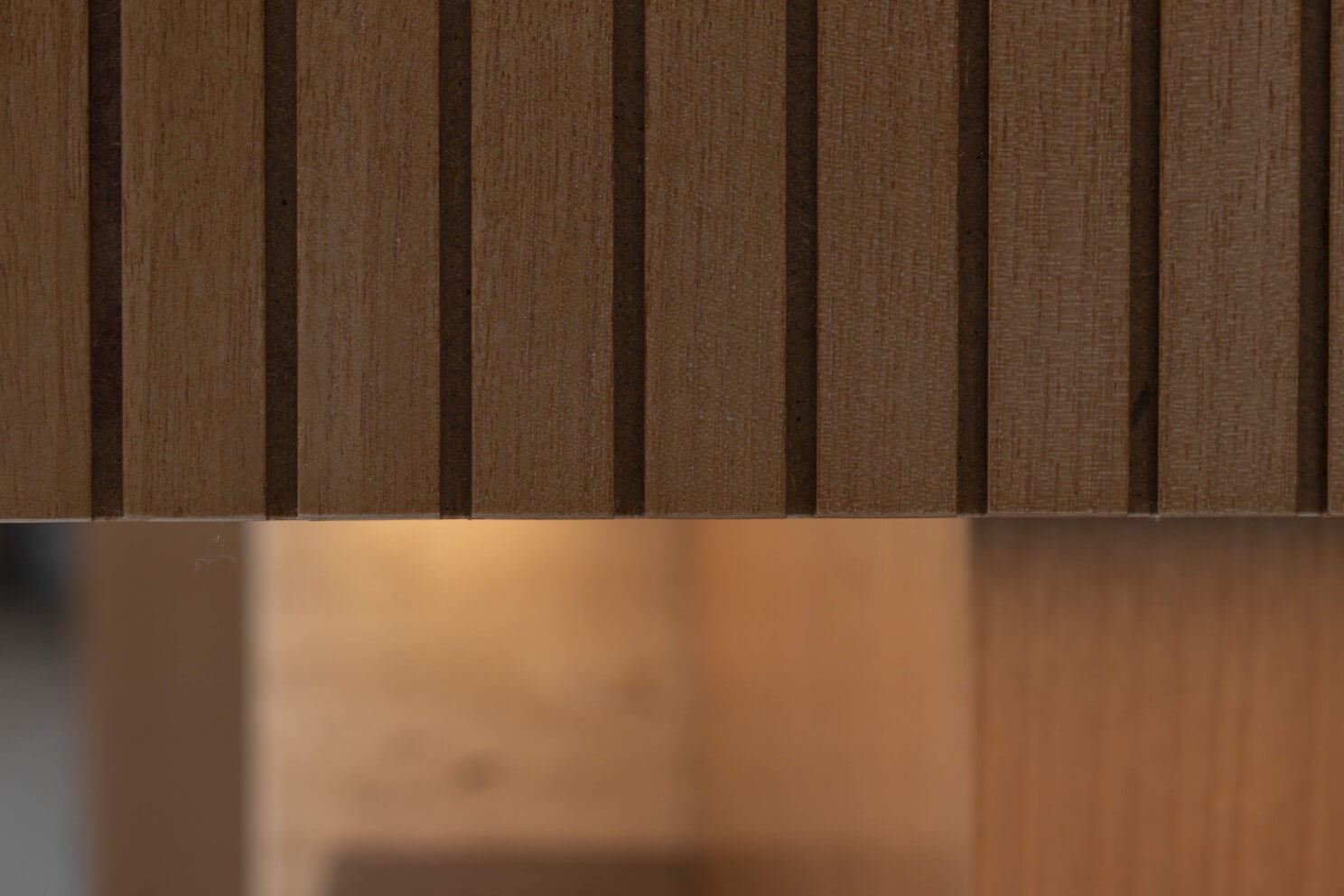
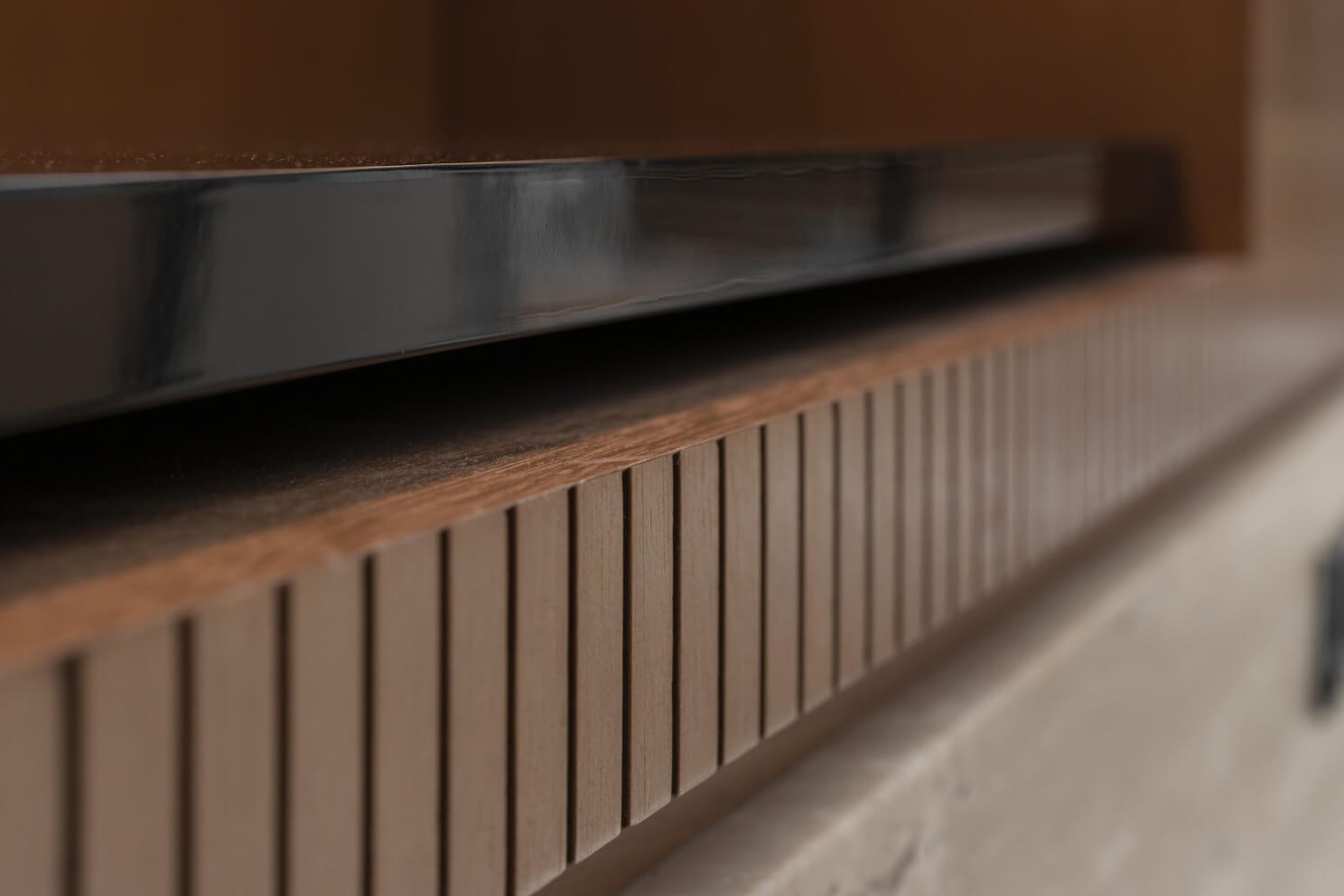
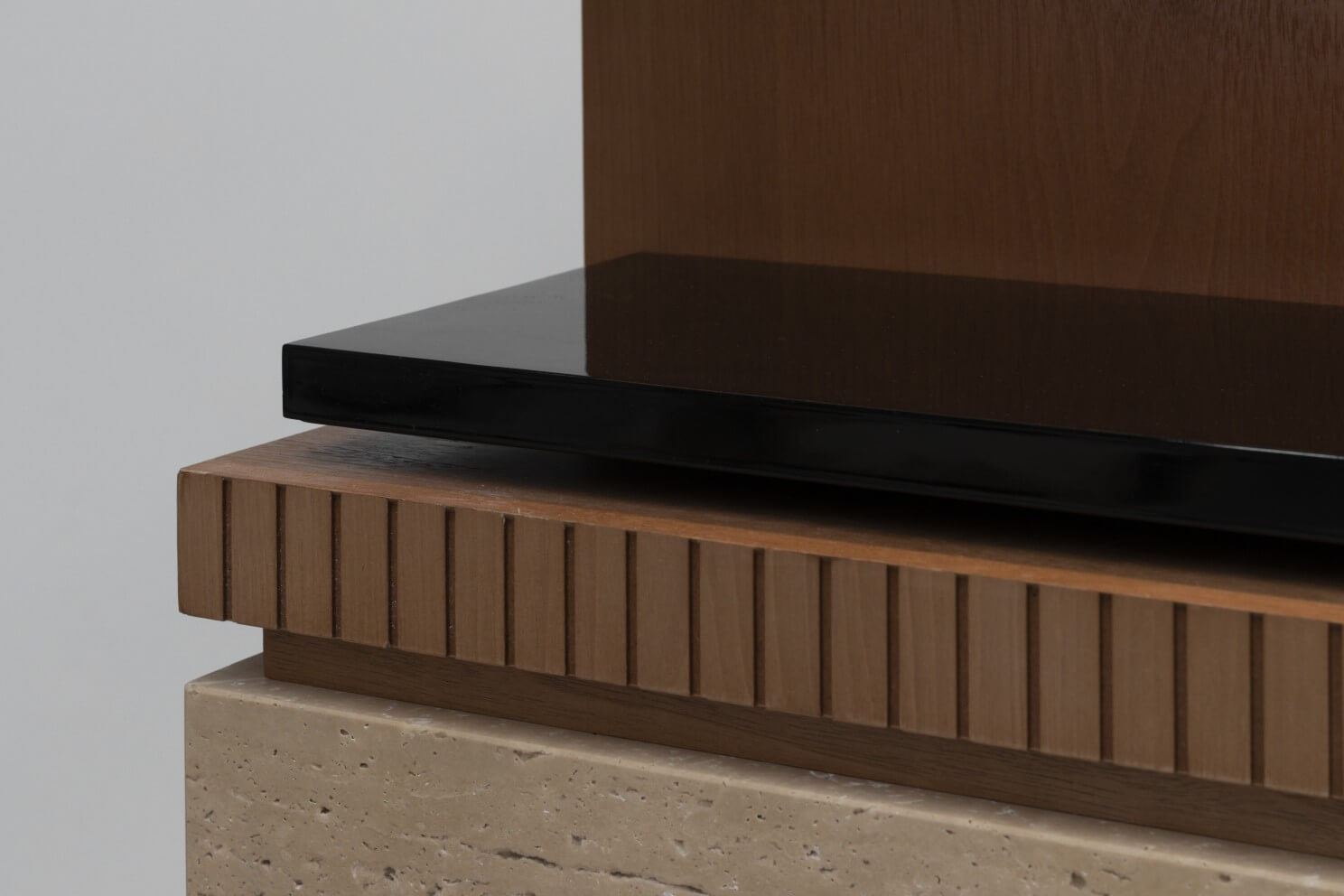
4. Deep-dyed modified veneer – standard veneer wouldn’t deliver the colour depth required. We modified the wood, dyed it through the entire thickness, and then applied multiple lacquer coats. The result suggests the material goes deeper than it physically does.
5. Premium wallcovering as furniture finish – the backwall uses textile typically reserved for luxury residential interiors. On furniture. Creating a refined backdrop that elevates product presentation to gallery standards.
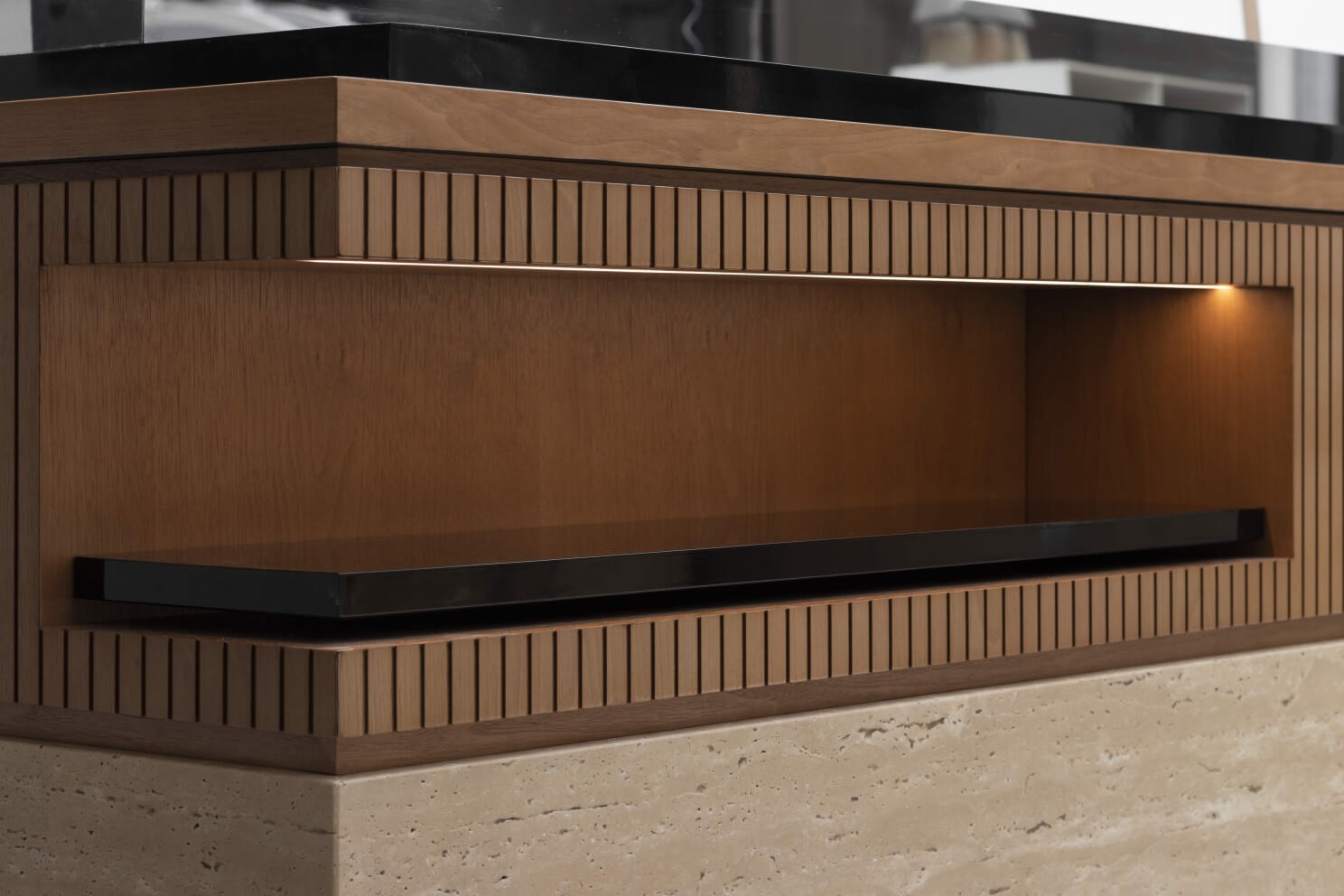
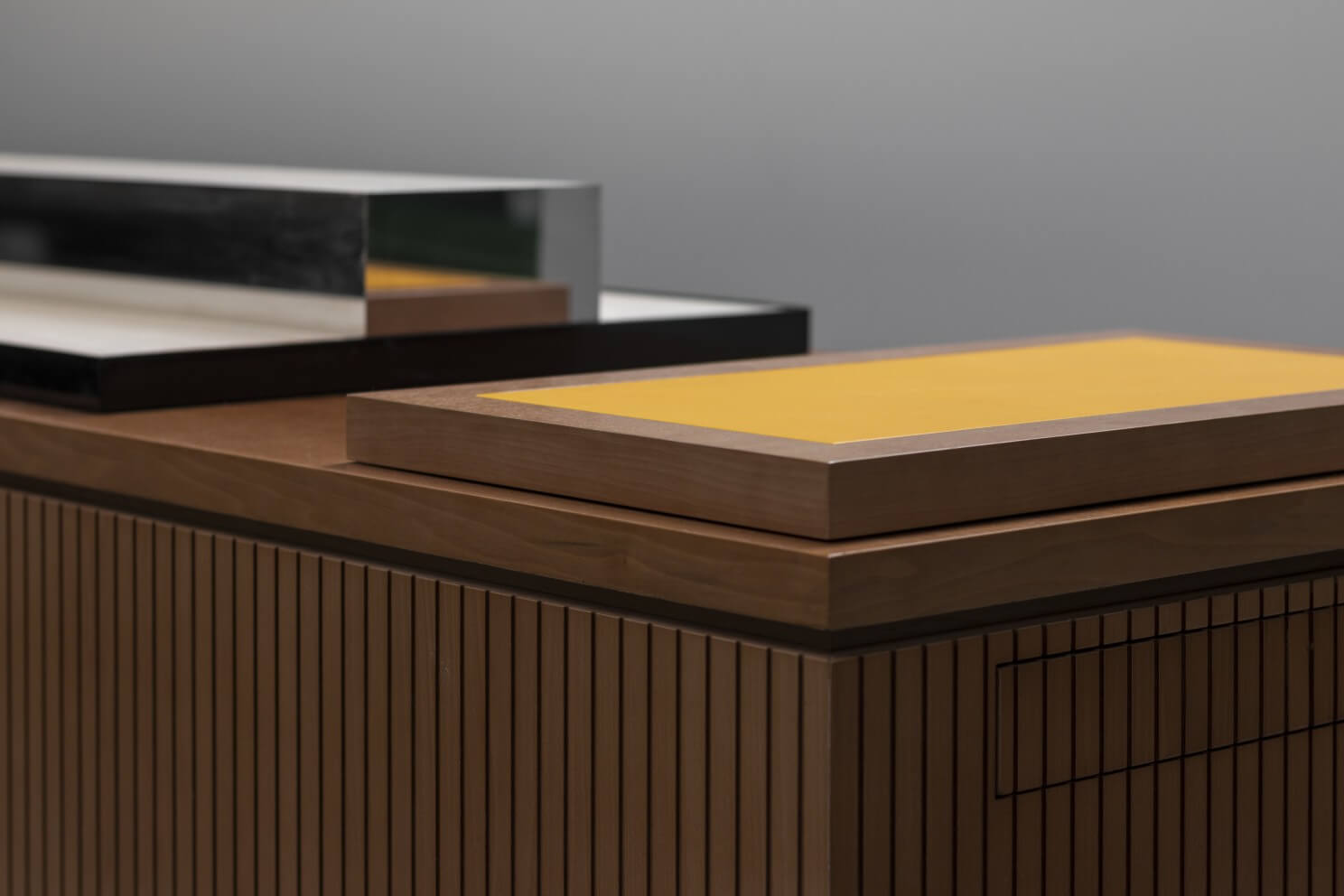
6. Travertine stone on steel construction – the centrepiece table spans 2.5 metres with stone legs mounted on a concealed steel framework. Multi-level glass shelving above creates focal points visible from across the retail space.
The Real Challenge Nobody Talks About
Can you create a museum-quality presentation in a space where hundreds of customers will touch, lean, and interact with displays daily?
That’s the brief luxury brands actually give you, even if they don’t say it explicitly.
“Every element started as full-scale 3D documentation, accurate to one millimeter” – Wojciech explains. “This wasn’t about impressive software. It was about eliminating any possibility of error when you’re working with high-end materials that demand absolute precision.”
That’s the brief luxury brands actually give you, even if they don’t say it explicitly.
“Every element started as full-scale 3D documentation, accurate to one millimeter” – Wojciech explains. “This wasn’t about impressive software. It was about eliminating any possibility of error when you’re working with high-end materials that demand absolute precision.”
What Luxury Actually Demands
Luxury brands don’t just want beautiful furniture. They want solutions that standard manufacturing cannot deliver. They want technical precision married with aesthetic refinement. They want the impossible made routine.
In Nuremberg, we delivered exactly that.
The Acqua di Parma installation proves something we’ve known for years: the most interesting projects happen when clients demand more than what’s readily available.
And that’s where innovation lives!